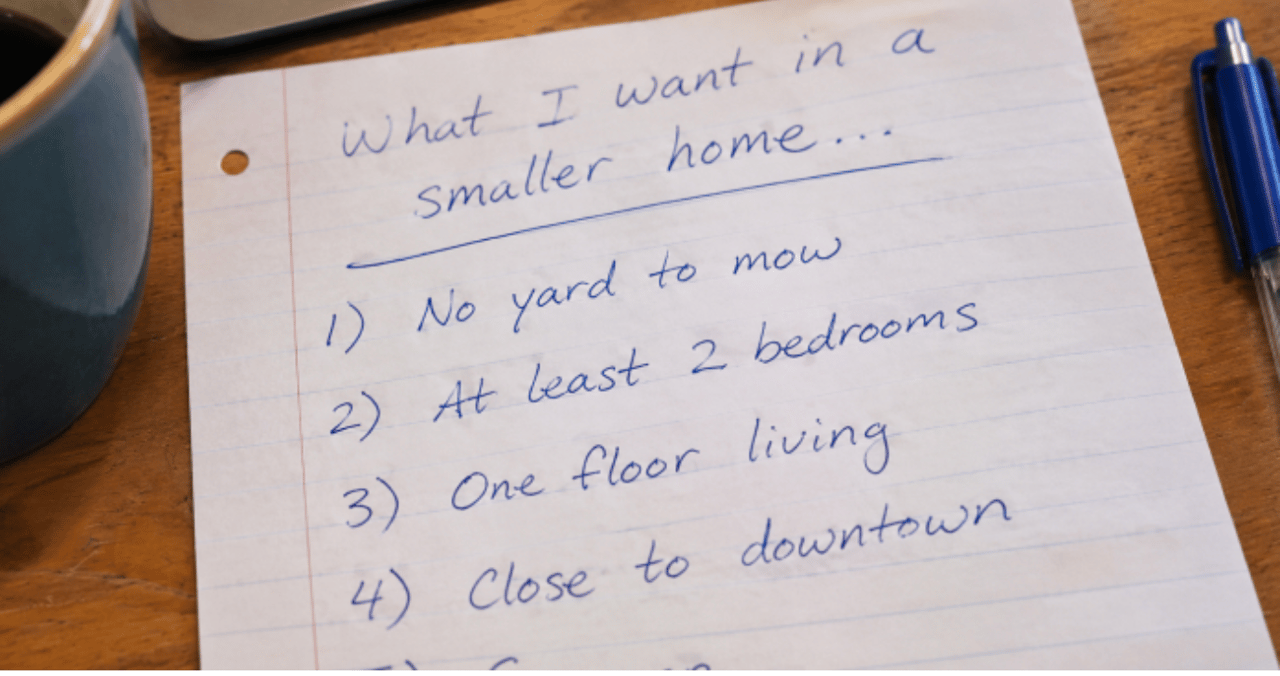
Thinking About Downsizing, but Can’t Find the Right Place? 7 Things You Can Do Now
Buyer November 18, 2026
You’ve been thinking that downsizing might make sense.
Less house to maintain. A layout that works better for you. Maybe a location where you’d rather spend your time.
You haven’t figured out the details, but the idea is appealing enough that you start mentioning it to people.
But judging by the responses, you’ve chosen to accept an impossible mission.
By the time the cashier at the grocery store weighs in, you’re wondering what you were thinking.
But how many of those people have actually explored the kind of move you’re considering? Some may be perfectly happy where they are. Others wouldn’t want a smaller home at any price. And someone who gave it a half-hearted attempt a few years ago may still be telling the story.
It’s easy to walk away feeling like they’ve given you your answer, when it’s really just someone else’s casual perspective.
Of course, downsizing can involve real challenges. Finding a place you like, figuring out the costs, and coordinating a move all take some work. But hearing why it sounds difficult isn’t the same as finding out whether it could work for you.
And if you keep the idea in the “probably impossible” category, you may never take the steps that would make it possible. You’ll continue to browse smaller homes occasionally, while someone else is learning their options and getting ready to act when a suitable home appears.
You don’t have to commit to moving. But if downsizing is something you’d seriously like to explore, give the idea a little more consideration than a conversation at lunch… or in the checkout line.
Here are seven things you can do to put yourself in a position to downsize when (and if) it makes sense for you.
A smaller house isn’t necessarily the goal. Downsizing means different things to different people.
Maybe you want less cleaning, fewer maintenance projects, or weekends that don’t revolve around a lawn mower.
Perhaps you’d like more convenience: being closer to family, walking to restaurants, or shortening your commute.
Those benefits can appeal at any age. You don’t need to wait until retirement, an empty nest, or a house that’s become difficult to manage. Simply wanting to spend less of your Saturday maintaining it is a perfectly good reason to explore your options.
Knowing what you hope to gain gives your search a more useful direction than “something smaller.”
You might need fewer rooms, but still need the right ones.
An office could matter more than a formal dining room. A comfortable guest room may be essential, while a large yard has lost its appeal.
Consider layout, stairs, storage, parking, outdoor space, and how you actually spend your days.
Then distinguish requirements from preferences. If everything makes the must-have list, you could rule out homes that would suit you beautifully—with one or two reasonable compromises.
The goal is to choose your compromises thoughtfully, before an appealing kitchen starts negotiating on your behalf.
It’s difficult to judge your options when half of your financial picture is a guess.
Before concluding that the homes you like are too expensive, ask a local agent for a realistic assessment of your current home’s value.
Discuss its condition, comparable sales, and any preparation that might help when you eventually sell. You can also work toward an estimate of what you’d have left after selling costs and any mortgage payoff.
Pro tip: Don’t rely on an online estimate to decide what your house is worth. Ask a local agent for an initial market analysis that takes your home’s condition, features, and recent comparable sales into account.
Smaller doesn’t automatically mean cheaper.
A smaller home in a location you prefer could cost as much as your current house—or more. A condo may reduce your maintenance responsibilities, but association fees still need a place in your budget.
Compare taxes, insurance, utilities, maintenance, association costs, and any financing you’d need. Include the expenses of selling, buying, and moving, too.
You may decide that less upkeep or a better location is worth a similar monthly expense. Just make that decision with actual numbers rather than assuming smaller automatically means lower costs.
Listing photos are useful, but they can’t tell you everything about how a home would feel to live in.
A place that looks cramped online might have an excellent layout. One that photographs beautifully might leave you wondering where you’d put the coffee maker.
Have an agent show you homes that appeal to you, but also be open to home types or locations they suggest that you might not have considered.
Don’t get discouraged if some places are definite nos, or there aren’t many options to see. You’re learning what’s available and what works for you. Your agent is learning, too—which helps them recognize a promising fit and help you prepare to pursue it.
If a promising home appeared tomorrow, would you know what you’d need to do next?
For many would-be downsizers, this is where the uncertainty lives. They’re interested, but haven’t worked through how to get from one house to the other.
Talk with your agent about possible timing, preparation, and ways to coordinate the transactions. If financing would be involved, bring a lender into the conversation early.
You don’t need to list immediately. But understanding your options now means fewer unanswered questions when you find a home you love—and less chance of someone else buying it while you’re still figuring out whether you can make the move.
You don’t have to spend this weekend deciding the fate of everything in the attic. But getting a head start on what you’d keep, donate, sell, or throw away can make an eventual move much easier.
Start with a drawer, closet, or category of belongings you’re ready to sort through. Make gradual decisions while you have time, rather than turning years of accumulated possessions into an emergency project.
Even if you ultimately stay, having a closet you can open without something falling on you is a bonus!
Buyer

Buyer

Buyer
Buyer

Buyer



Lifestyle
Before you run out and pick up a flock of your own, there are a few important real estate rules.

Buyers
For the past two years, a lot of people have been waiting on the housing market to do.
You’ve got questions and we can’t wait to answer them.